

Sheabutter
Description Sheabutter
Geographical Information
Location: The shea butter is produced in a factory located in the industrial zone of Bobo Dioulasso, Burkina Faso.The shea nuts are collected in protected natural forest areas in two zones: Banfora, about 65 km south-west of Bobo Dioulasso and Diébougou, about 100 km east of Bobo Dioulasso.
Climate: Tropical savannah
Temperature: 10 - 45 degrees C
Rainy season: End of May to beginning of October
Dry season: October to May
Rainfall: 1200 mm annually, most of the precipitation falling within 2 months
Background / history of project Agri-Faso has been certified organic by LACON GmbH since 1998, when the company was founded for the export of organic hibiscus.The shea butter project was initiated in May 2002. The women collected the shea nuts in the natural forest area and produced the shea butter individually at their homes in the village. The shea butter was first certified organic for the harvest of 2002.In 2004, Agri-Faso purchased three machines for shea butter production and installed them in a warehouse rented by Agri-Faso in Bobo Dioulasso. The shea nuts are collected by womens’ associations in two zones in the Bobo Dioulasso region.Shea nuts are collected from wild natural forest areas.Agrifaso exports the crude shea butter.
Certification Agri-Faso has been certified organic by LACON GmbH since 1998, when the company was founded for the export of organic hibiscus.The sheabutter from AGRI-FASO has been certified organic by LACON GmbH since 2002 according the European Organic Standard and to the National Organic Programm of the USA. It is also kosher certified since 2003.
Processing Units
AGRI-FASO
Shea Butter Factory
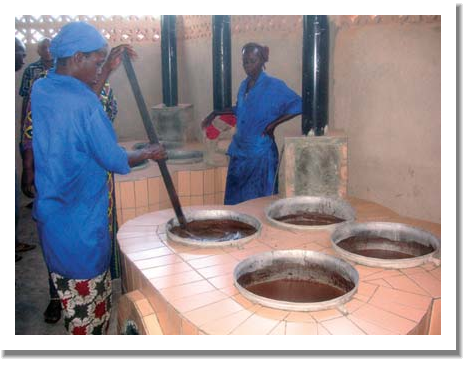
The shea kernels are bought from the womens’ associations in the villages and transported to the processing unit.The shea kernels are cleaned and sorted, grinded, roasted and pressed at the factory.The shea oil resulting from the pressing is washed to produce the crude shea butter.The premises are located in the industrial zone just off the N8, the road leading to Banfora and fully enclosed by a high wall. Three small halls are used for the shea butter production. One hall is for storage of the shea kernels as they arrive from the villages. The three machines for the butter production are set up in the middle hall. The third hall is used for storing the finished crude shea butter. The building has cement floors and ceilings. 25 employees are working permanently in the factory.
Details concerning wild collection
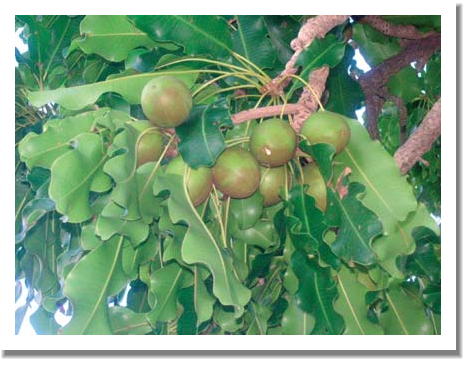
General Information applicable to all wild collection units of Agri-Faso The shea tree grows naturally in the wild savannahs in West Africa beginning in western Mali and ending in the south of Chad covering an area of about 5000 km x 750 km.The shea tree grows in sandy-clay soils and requires a rainy season with 500 to 1200 mm of rainfall and a dry season of 5 to 8 months. The density of shea trees in a wooded area ranges from 20 to 80 trees per ha. The shea tree reaches a height of 10 to 15 m and has a thick waxy and deeply fissured bark that makes it fire resistant.The shea tree produces its first fruit when it is about 15 years old and reaches its full production at the age of 25 to 50 years. At the end of the rainy season the mature trees loose their leaves and begin to flower. The flowering period lasts about 2 months. One tree produces 20 kg to 40 kg of fresh fruit. The fruit is about the size of a plum. The flesh of the fruit is edible. One to three shea nuts, each surrounded by a brittle shell, are in the middle of the fruit. The shea nut contains a kernel from which the shea butter is made.Agri-Faso has defined the areas in which the women of the associations are to collect the shea nuts. The areas of collection are wild forest areas in which no cultivation at all is permitted. The women go into the forest on foot and collect the ripe shea fruit that has fallen to the ground. The shea trees are not damaged in any way during the collection. No damage to other vegetation is caused by the women who enter the forest to collect the nuts. The wild collection is not destructive to the environment in any way. The women transport the collected fruit in pans that they carry on their heads. The women must cover distances of many kilometres in order to reach the collection area as these forest areas are located far from their villages.Once having returned to the village with the shea fruit, each woman begins to dry the nuts. First the green edible flesh must be removed. The brown nuts inside the fruits are then boiled and spread out in the sun to dry. The nuts are dried for about 3 days in the sun. Following sun drying, the nuts are crushed, a little at a time, with a wooden pestle in a wooden bowl in order to crack the hard shell. The shell is then removed by hand exposing the kernel. The kernels are dried in the sun again in order to reduce the moisture content thus preserving the kernels. The kernels are selected in order to remove broken or bad kernels.The dried kernels are packed into new sacks provided by Agri-Faso. The sacks are labelled with the village and the code. Agri-Faso collects the sacks of kernels from the village and transports them to the factory at Bobo Dioulasso.
Contact and Information info@agrifaso.com
